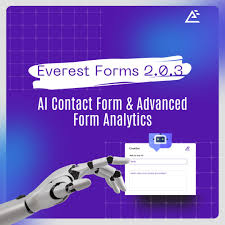

Everest Forms – Advanced Form Analytics is an add-on for the Everest Forms plugin that enhances your ability to track, analyze, and optimize your forms' performance. By integrating advanced analytics, this add-on allows you to monitor key metrics such as form submissions, completion rates, user behavior, and much more. It provides you with valuable insights that can help you improve form design, increase conversions, and optimize the user experience.
Here’s a detailed look at the features and benefits of the Everest Forms – Advanced Form Analytics add-on:
Key Features of Everest Forms – Advanced Form Analytics:
- Form Submission Tracking:
- The Advanced Form Analytics feature tracks the number of form submissions in real-time, giving you insights into how often your forms are being filled out and submitted. This helps you measure engagement and success.
- Completion Rate Analysis:
- The add-on calculates and provides data on the completion rates for each form. You can identify if users are abandoning forms mid-way and pinpoint the specific fields that might be causing friction, allowing you to optimize the form flow.
- Drop-off and Abandonment Rate:
- With this add-on, you can monitor how many users abandon the form before completing it. By analyzing where users drop off, you can determine problematic areas (e.g., complex fields or confusing questions) and make necessary adjustments to improve form completion.
- User Behavior Analytics:
- The user behavior analytics provide a deeper understanding of how users interact with your forms. You can track clicks, field focus, and time spent on each section, helping you optimize the user interface for a smoother experience.
- Form Field Performance:
- This feature breaks down the performance of individual form fields. You can see which fields are frequently filled out correctly, which ones are left blank, and which fields may be causing user frustration. This data can help you streamline the form and reduce drop-offs.
- Real-Time Analytics Dashboard:
- The add-on includes a real-time analytics dashboard within your WordPress admin area, where you can view live statistics and metrics for your forms. The dashboard is user-friendly and visually displays important data in an easy-to-understand format, including charts and graphs.
- Conversion Tracking:
- The add-on tracks conversion rates for each form, allowing you to measure how many submissions convert into actual leads, sales, or sign-ups. This helps you evaluate the effectiveness of your forms in meeting business goals.
- User Insights:
- The analytics tool can offer insights into the demographics of users interacting with your forms, such as their geographical location, device type (mobile/desktop), and browser. This can inform your strategy in targeting specific user groups or optimizing for different platforms.
- Form Analytics Over Time:
- The add-on allows you to analyze your form’s performance over a set period (daily, weekly, monthly). You can view trends and patterns in form submissions, helping you understand seasonal behavior or the impact of marketing campaigns.
- Form Conversion Funnels:
- Track the entire form submission funnel by measuring how many users start the form, progress through different stages, and complete the form. This allows you to see if there are specific stages where users drop off and take action to optimize those stages.
- Exportable Reports:
- You can export the analytics as CSV or PDF files to share with team members or stakeholders. This is useful for creating performance reports and making data-driven decisions.
- Email Notifications Based on Analytics:
- Based on specific analytics, you can set up email notifications. For example, you can receive an alert when form submissions exceed a particular threshold, or when form abandonment rates are unusually high.
- Filter and Segment Data:
- The analytics dashboard allows you to filter and segment data by form type, submission source (e.g., traffic from different marketing campaigns), or by user demographic. This enables you to see how different factors are impacting form performance.
- A/B Testing Support:
- While not always included, some implementations of advanced form analytics may support A/B testing of forms. This allows you to test different versions of your form (e.g., layout, questions, field order) to determine which version yields better conversion rates.
- Integration with Google Analytics (Optional):
- You may have the option to integrate Everest Forms Analytics with Google Analytics to consolidate data into a broader analytics system for more advanced reporting and cross-platform insights.
Benefits of Using Everest Forms – Advanced Form Analytics:
- Optimized Form Performance:
- By tracking and analyzing form submission data, drop-offs, and user behavior, you can identify pain points in the form-filling process. This helps you make informed decisions to improve the form’s design, content, and user experience, which can lead to higher completion rates and conversions.
- Better Conversion Tracking:
- The ability to track form conversions lets you assess how well your forms are helping you achieve your business objectives, whether it's generating leads, processing sales, or signing up new users. This data enables you to fine-tune your strategies to maximize form effectiveness.
- Increased User Engagement:
- By gaining insights into how users are interacting with your forms, you can tailor the user experience to make forms more engaging, reducing abandonment and encouraging more submissions.
- Data-Driven Decisions:
- With detailed form analytics, you can make data-driven decisions to optimize form design and content. Whether you're tweaking field layouts, adjusting questions, or simplifying the submission process, the analytics give you the insights needed to improve overall form performance.
- Quick Identification of Issues:
- If users are frequently abandoning your forms at a certain point, you can quickly identify the issue (such as confusing fields or overly lengthy forms) and resolve it to improve completion rates. The real-time data helps you make quick adjustments.
- Improved Marketing Campaigns:
- Understanding the source of your form submissions (e.g., from email campaigns, social media, or paid ads) can help you fine-tune your marketing efforts. You can focus on the channels that bring in the highest-quality leads and adjust your approach for underperforming channels.
- Enhanced Form Design:
- With insights into which fields are most commonly skipped or cause user frustration, you can streamline the form design. Making the form simpler, faster, and more user-friendly can increase the likelihood of users completing the submission.
- Increased User Satisfaction:
- A smoother form-filling experience, guided by insights from Advanced Form Analytics, leads to higher user satisfaction. When users don’t get frustrated with complicated forms, they are more likely to complete them and engage with your business further.
- Clear ROI Tracking:
- For businesses that rely on forms for lead generation or sales, tracking ROI (return on investment) becomes easier with conversion metrics. You can directly link form submissions to revenue or lead generation efforts, giving you a clear understanding of how well your forms contribute to your bottom line.
- Customizable Reporting:
- The ability to filter and segment your data means you can create custom reports that highlight the metrics most important to your specific business goals, allowing you to share relevant insights with stakeholders or team members.
Use Cases for Everest Forms – Advanced Form Analytics:
- Lead Generation:
- Businesses using forms to collect leads can track conversion rates, drop-offs, and engagement to optimize their forms for better lead capture.
- E-commerce Websites:
- Online stores can track cart abandonment, product inquiries, or checkout forms to identify where users abandon purchases and work on improving the process.
- Event Registration:
- Event organizers can use analytics to see how many attendees are completing the registration form, whether they are dropping off at a particular stage, and adjust the form to increase registration rates.
- Surveys and Feedback Forms:
- For businesses collecting feedback through surveys, form analytics can help you understand which questions are generating the most responses and where respondents tend to abandon the survey.
- Subscription Sign-Ups:
- Websites that offer memberships or subscriptions can use analytics to track sign-up rates, identify form completion issues, and increase conversion rates.
- Nonprofit Donations:
- Nonprofit organizations can track donation form submissions to see how many visitors are completing donations, what types of donations they are making, and where they might need to improve the donation process.
- Consultations or Booking Forms:
- If you run a consulting business or offer appointment-based services, analytics will help you track how many people are booking consultations or appointments, and where they might be abandoning the booking process.






![Booknetic - Appointment Booking & Appointment Scheduling & Calendar reservation [SaaS]](https://gplpixel.com/wp-content/uploads/2024/06/Booknetic-Appointment-Booking-Appointment-Scheduling-Calendar-reservation-SaaS-400x203.jpg)