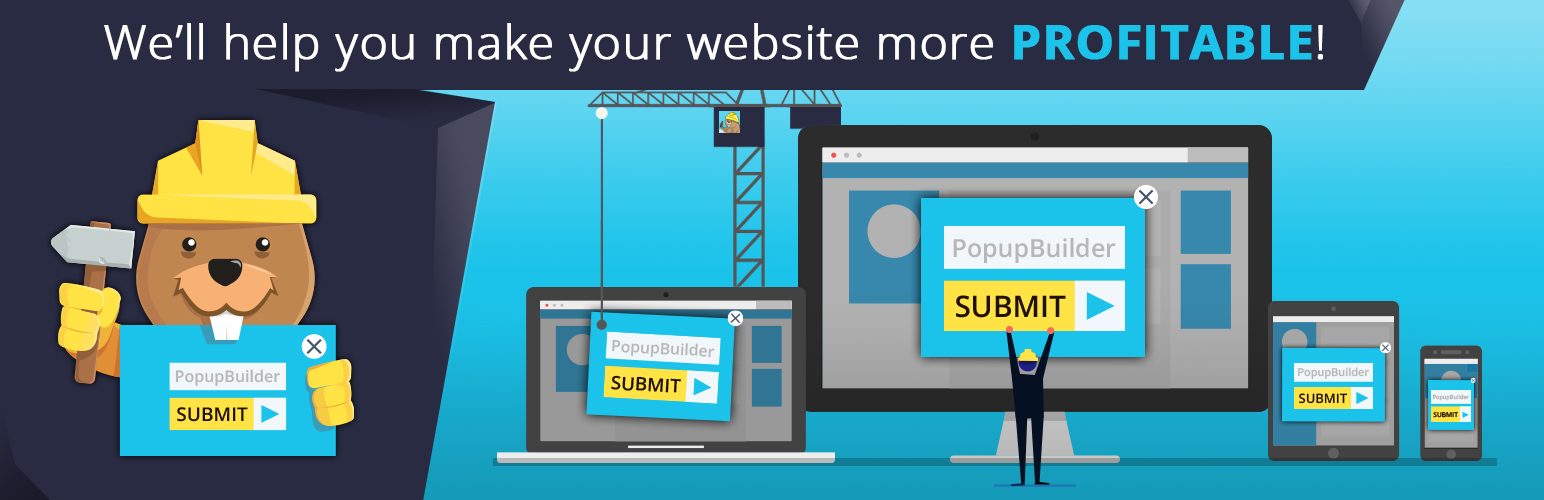

Popup Builder is a popular WordPress plugin that allows you to create and manage popups on your website. These popups can be used for various purposes, such as capturing leads, offering discounts, displaying announcements, or promoting content. The plugin provides an easy-to-use interface for designing, customizing, and controlling the display of popups on your site.
Here’s a breakdown of Popup Builder and its key features:
Key Features of Popup Builder
- Variety of Popup Types:
- Modal Popups: These are the standard popups that appear in the center of the screen and require the user to interact with them (e.g., by closing or accepting an action) before they can proceed.
- Slide-ins: Popups that slide into the page from the sides, top, or bottom, providing a more subtle and less intrusive experience.
- Floating Bars: Horizontal bars that can appear at the top or bottom of the page with a call to action (e.g., "Subscribe Now" or "Get 10% Off").
- Full-Screen Popups: These popups take up the entire screen, making them great for capturing attention, such as for special offers or announcements.
- Popup Customization:
- Popup Builder offers extensive customization options to tailor your popups to your site's look and feel. You can:
- Change the popup layout (e.g., image, text, form).
- Customize the colors, fonts, and borders.
- Add animations, effects, and transitions for smoother and more engaging user experiences.
- Choose from pre-designed templates or create your own from scratch.
- Popup Builder offers extensive customization options to tailor your popups to your site's look and feel. You can:
- Lead Generation Forms:
- The plugin allows you to embed forms within popups to collect email addresses, phone numbers, or other data from your users. This is ideal for building an email list, running contests, or gathering feedback.
- You can integrate these forms with popular email marketing services like MailChimp, ConvertKit, AWeber, and others.
- Targeting and Triggers:
- Display Triggers: Popup Builder provides various triggers that determine when and how your popups appear. Some options include:
- On page load: Display the popup as soon as the page is loaded.
- On scroll: Show the popup when the user scrolls down a certain percentage of the page.
- Exit Intent: Show the popup when the user moves their cursor toward the browser's exit or close button, indicating they might leave the page.
- On Click: Display the popup when a user clicks a specific element, like a button or link.
- Time Delay: Display the popup after a certain period, like after 5 seconds on the page.
- After inactivity: Trigger the popup when the user has been inactive for a certain period.
- Display Triggers: Popup Builder provides various triggers that determine when and how your popups appear. Some options include:
- Targeting Rules:
- You can set targeting conditions to control which users see your popups. Some options include:
- User location: Show popups based on geographic location (requires integration with geolocation services).
- User roles: Display different popups to logged-in users or specific user roles (e.g., customers vs. subscribers).
- Pages and Posts: Show popups only on specific pages, posts, or categories.
- Device types: Customize popups for desktop, tablet, or mobile devices.
- Referrers: Show popups to visitors coming from certain websites or traffic sources.
- You can set targeting conditions to control which users see your popups. Some options include:
- Advanced Display Settings:
- Popup Behavior: Control how the popup behaves, including options like:
- Auto-close: Set a timer for automatic popup closure after a set period.
- Close Button: Customize or hide the close button to give users an option to exit the popup.
- Overlay: Choose to show or hide the overlay (the semi-transparent background) that dims the page behind the popup.
- Responsive Design: Ensure your popups look good on all screen sizes, including mobile and tablet devices.
- Popup Behavior: Control how the popup behaves, including options like:
- A/B Testing:
- Popup Builder allows you to perform A/B testing to test different versions of popups. This is a powerful feature for improving your popup conversion rates by analyzing which design, content, or trigger performs the best.
- Analytics and Tracking:
- You can track popup performance through built-in analytics. This includes metrics like views, conversions, close rates, and more.
- Integration with Google Analytics and other third-party tools helps you measure the effectiveness of your popups.
- Multi-Language Support:
- Popup Builder is compatible with WPML (WordPress Multilingual Plugin) and Polylang, allowing you to create popups in multiple languages, which is essential for international businesses.
- Popup Scheduling:
- You can schedule when your popups should appear, allowing you to set specific start and end times, which is useful for time-sensitive promotions or seasonal offers.
Benefits of Using Popup Builder
- Increased Conversions and Engagement:
- Well-targeted and properly timed popups can significantly increase conversion rates by offering visitors promotions, newsletter signups, or important information at the right time.
- Lead Generation:
- Popups are a great way to collect email addresses, gather customer feedback, or run special offers, ultimately helping to grow your email list and customer base.
- User Experience Control:
- Popup Builder allows you to control the user experience and make the popups as subtle or eye-catching as necessary to get attention without being overly intrusive.
- Customization and Branding:
- The plugin’s flexibility allows you to fully align popups with your site’s branding, ensuring consistency and professionalism across your website.
- Advanced Targeting:
- Popup Builder lets you display popups based on user behavior and segment your audience for more personalized engagement, increasing the likelihood of achieving your conversion goals.
How to Use Popup Builder
- Install and Activate the Plugin:
- Install the Popup Builder plugin from the WordPress plugin repository or purchase and upload the premium version if you're using it. Once activated, it will appear in the WordPress dashboard.
- Create a New Popup:
- In the WordPress dashboard, go to Popup Builder > Add New Popup. From here, you can select the type of popup you want to create (modal, slide-in, etc.).
- Design the Popup:
- Customize your popup using the built-in editor. You can add text, images, buttons, forms, and more. The editor provides various styling options, including color, fonts, spacing, and more.
- Set Display Triggers:
- Choose when and how your popup will appear. You can set triggers based on time, scroll depth, exit intent, or other user actions.
- Set Display Rules:
- Configure targeting rules to control which users will see your popup, based on factors such as device type, page visited, or user location.
- Publish the Popup:
- Once you're satisfied with the design and settings, publish the popup. You can create multiple popups and manage them from the Popup Builder dashboard.
- Track Performance:
- Use the plugin's analytics or integrate with Google Analytics to track the success of your popups and make improvements as needed.



![Booknetic - Appointment Booking & Appointment Scheduling & Calendar reservation [SaaS]](https://gplpixel.com/wp-content/uploads/2024/06/Booknetic-Appointment-Booking-Appointment-Scheduling-Calendar-reservation-SaaS-400x203.jpg)