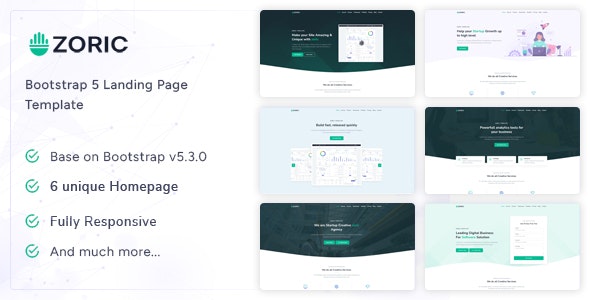
Zoric is another responsive landing page template designed to create an impactful online presence for products, services, or startups. Here’s an overview of its features and how you can utilize it:
Key Features of Zoric Template
- Responsive Design:
- Mobile Optimization: Ensures that the landing page looks great and functions well on all device sizes.
- Modern and Sleek Aesthetics:
- Visual Appeal: Typically includes high-quality visuals, clean lines, and modern design elements.
- Customizable Layouts:
- Hero Section: Prominent area for a compelling headline, subheadline, and CTA button.
- Feature Sections: Areas to showcase the key features or benefits of your product or service with icons, images, or graphics.
- About Us: Section to provide information about your company or product.
- Testimonials: Space for user reviews or client testimonials to build trust.
- Contact Form: An easy-to-use form for visitors to reach out or request more information.
- Footer: Contains additional navigation links, social media icons, and contact information.
- Call-to-Action (CTA) Buttons:
- Primary Actions: Prominent buttons for actions such as “Sign Up,” “Buy Now,” or “Learn More.”
- Integrations:
- Social Media: Easily link to your social media profiles.
- Analytics: Integration options for tools like Google Analytics to track visitor behavior.
- Customizable Elements:
- Colors and Fonts: Easy to adjust to match your branding.
- Content: Sections can be customized with your own text, images, and media.
How to Use the Zoric Template
- Setup and Installation:
- Download and Extract: Obtain and extract the template files.
- Open in Editor: Use a code editor or an IDE to access and modify the HTML, CSS, and JavaScript files.
- Customization:
- Update Content: Replace placeholder text and images with your own content.
- Adjust Styles: Modify the CSS to align with your brand’s colors, fonts, and overall aesthetic.
- Configure CTAs: Ensure CTA buttons are linked to the appropriate pages or functions.
- Testing:
- Cross-Browser Compatibility: Check that the template performs well across different browsers (Chrome, Firefox, Safari, etc.).
- Responsive Testing: Confirm that the design is responsive and looks good on various devices and screen sizes.
- Deployment:
- Hosting: Upload the template files to your web server or hosting provider.
- Domain Configuration: Point your domain name to the hosted files.
- Analytics and Tracking:
- Add Tracking: Implement tracking tools like Google Analytics to monitor site performance and user interactions.
Customization Tips
- Images and Graphics: Use high-quality, relevant images that resonate with your target audience.
- Copywriting: Write compelling and concise copy that clearly communicates your value proposition.
- Design Consistency: Ensure that the design elements are consistent throughout the page for a professional look.